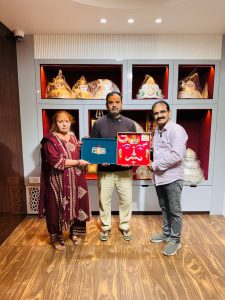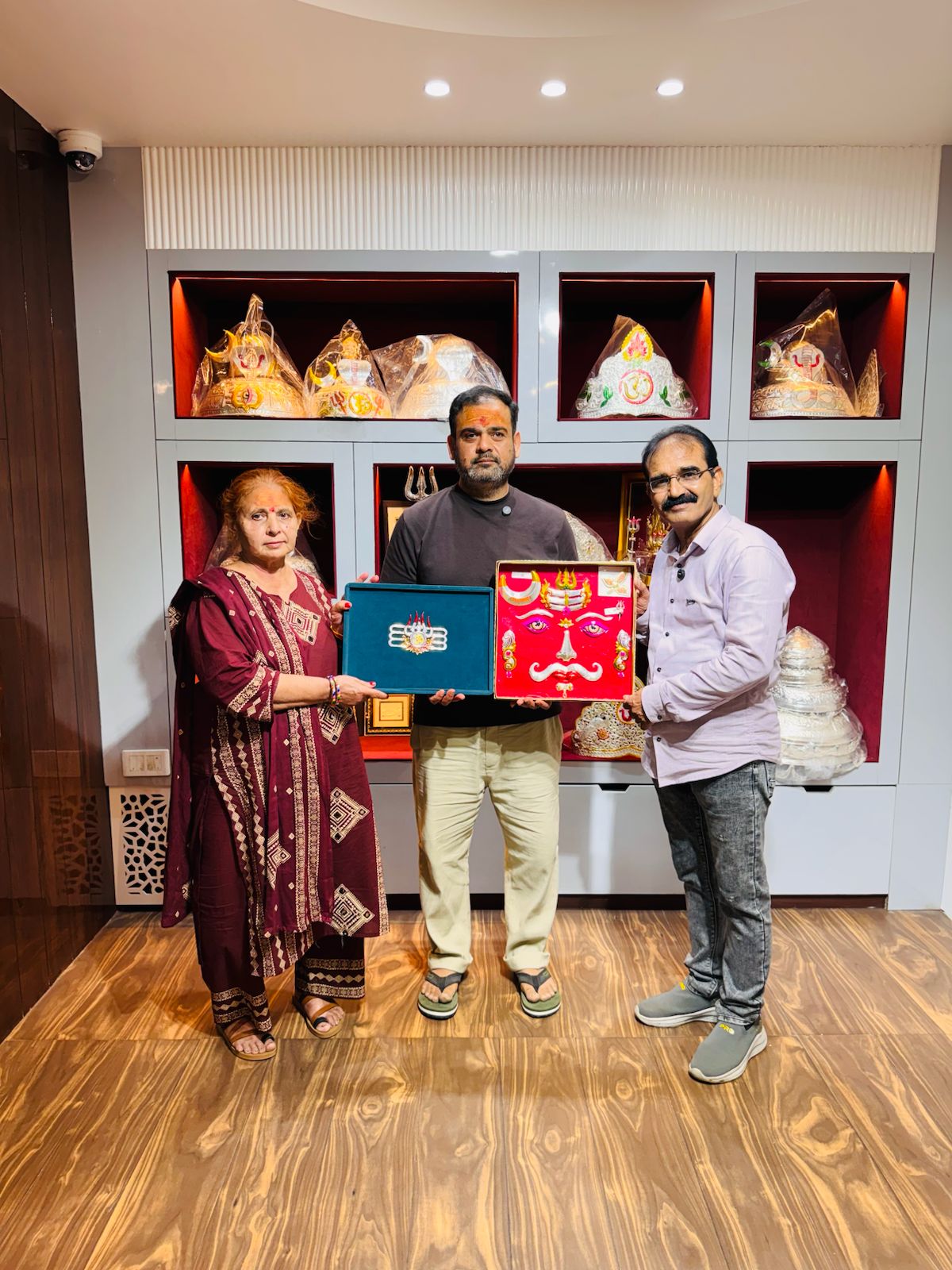
Among the various ceremonial silver pieces Shree Ram Jewellers creates for Baba Mahakal at Ujjain’s Mahakaleshwar Jyotirlinga temple, the Chandrama — a silver crescent moon placed on the deity — stands out, according to the store’s owner, as reflecting some of its most elaborate craftsmanship.
The crescent moon holds particular iconographic significance in Shiva worship, since Lord Shiva is traditionally depicted wearing the crescent moon in his hair, making the Chandrama one of the more visually and symbolically important adornments used during the deity’s daily rituals at the temple, including Bhasma Aarti, Sandhya Aarti, and Bhog Aarti. According to Shree Ram Jewellers, the store has created a wide variety of Chandrama designs over time, each rendered in pure silver and handcrafted without machine involvement at any production stage.
Why the Chandrama Requires Particular Skill
A crescent shape, unlike a flatter ornamental piece, requires precise control over curvature and proportion to achieve a form that reads correctly as a crescent moon rather than an ambiguous curved shape, a level of precision that becomes more demanding as designs incorporate additional engraved detail along the crescent’s surface. Silversmiths working on pieces like the Chandrama generally need to balance structural considerations — the piece must sit correctly on the deity during ritual placement — with the ornamental detail expected of ceremonial temple silverwork.
Variety Within a Single Ritual Object
Producing multiple distinct Chandrama designs, as Shree Ram Jewellers describes doing, suggests an ongoing creative process around a single recurring ritual object rather than a single fixed template reproduced repeatedly, allowing the temple’s silver adornments to vary across different occasions, festivals, or aarti ceremonies throughout the year. This kind of design variation within a narrow, ritually defined object type reflects the broader emphasis on originality the store places across its full product range, from the Mukut and Safa to the Belpatra and Jaladhari pieces it also produces.
For devotees or collectors interested in commissioning a Chandrama or similar silver crescent piece for personal or household deity worship, viewing examples of the store’s past designs — through its Instagram presence or by visiting the Tower Chowk location directly — offers a more concrete sense of the range of styles available than a general description of the craftsmanship alone.
Weight and thickness of the silver used also affect how a Chandrama sits and catches light during ritual display, practical considerations that go beyond pure visual design and require a craftsman to understand both the material properties of silver and the specific way a piece will be presented during aarti ceremonies at the temple.
Design continuity across multiple Chandrama pieces made for the same deity over time likely also matters to a temple’s broader visual tradition, since a series of crescent designs used across different festivals and occasions contributes to a recognizable aesthetic identity for Baba Mahakal’s ceremonial presentation that devotees come to associate with the deity’s worship at Mahakaleshwar specifically.
Photographs and videos of aarti ceremonies circulated widely among devotees, both in person and online, mean a temple’s ceremonial silverwork effectively functions as a visible, recurring symbol recognized well beyond those physically present at the temple on a given day, raising the practical stakes of getting each Chandrama design right relative to a purely private commission that only a small circle would ever see.