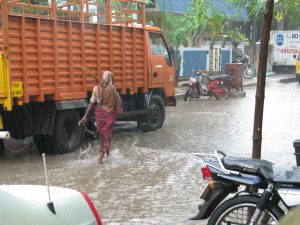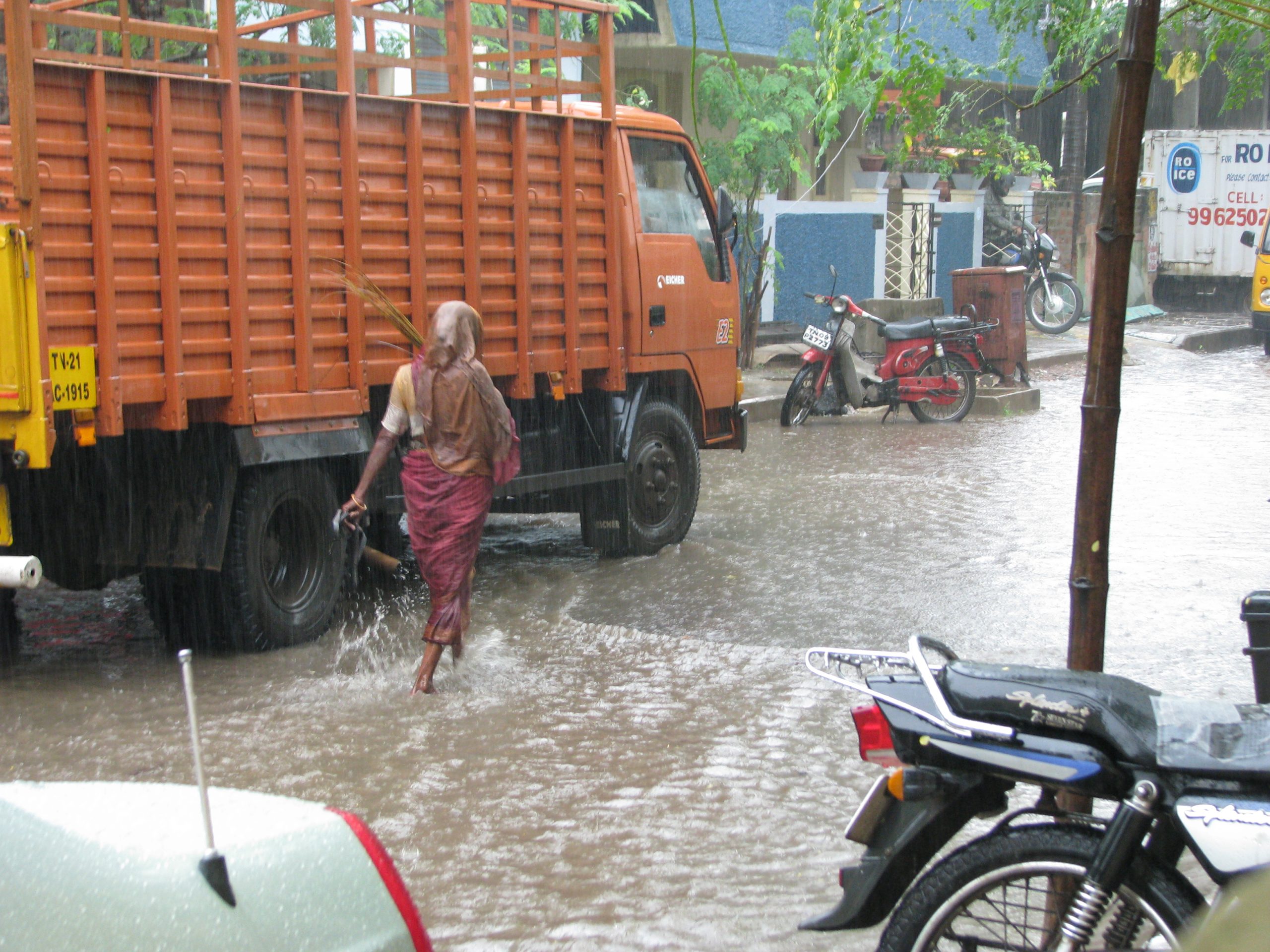
Representative image. Photo: Photo by McKay Savage from London, UK, Wikimedia Commons, CC BY 2.0
The India Meteorological Department has issued a red alert for Odisha, Chhattisgarh and Vidarbha as a deep depression moves through eastern India.
The depression is currently situated over north interior Odisha and adjoining Gangetic West Bengal, tracking west-northwestwards at around 12 kilometres per hour.
The IMD said the system is expected to move across north Odisha, south Jharkhand and north Chhattisgarh within the next 24 hours, bringing heavy to very heavy rain.
Isolated spots within the red alert zone could see extremely heavy rainfall of more than 204.5 millimetres, with authorities flagging flooding and waterlogging risks.
An orange alert covers Haryana, Chandigarh, Punjab, western Madhya Pradesh, Nagaland, Manipur, Mizoram and Tripura, where heavy to very heavy rain is expected.
Rain alerts are also active for Delhi, Maharashtra, Gujarat, Karnataka, Rajasthan, Uttar Pradesh, Uttarakhand, Himachal Pradesh, West Bengal and Bihar amid warnings of thunderstorms and strong winds.
The IMD has advised residents of hilly states to be alert to landslide risk and asked motorists to avoid driving through waterlogged roads during the alert period.
The department said it would keep tracking the depression’s movement and issue updated advisories as conditions develop.
A separate IMD press release on July 28 forecast normal to above-normal monsoon rainfall over northwest and central India in the next four to five days, with the monsoon trough expected to remain near its usual position through the week.
The IMD’s colour-coded alert system runs from green through yellow and orange to red, with red reserved for weather severe enough to warrant immediate precautionary action by state authorities and the public.
The IMD typically classifies a weather system as a deep depression when sustained wind speeds near its centre reach between 51 and 61 kilometres per hour, one step below a full cyclonic storm in intensity.
Red alerts from the IMD are reserved for situations warranting immediate action, urging state disaster management authorities to prepare for potential large-scale disruption to travel, power supply and daily life.
(Image: Photo by McKay Savage from London, UK, Wikimedia Commons, CC BY 2.0)