The proposed 11,200 MW Siang Upper Multipurpose Project is presented by the state as a strategic response to China’s hydropower plans on the Yarlung Tsangpo.
Sections of the Adi community fear displacement, loss of ancestral land and ecological damage.
Officials say the pre-feasibility exercise is not a final approval for construction.

Protests turned violent in Pasighat on October 23.
The Chief Minister has called for dialogue.
The bandh ran from 5 am to 5 pm, and Deputy Commissioner Jayanti Pertin said it stayed peaceful in Pasighat until the evening, according to Outlook India.
The bandh was called by Adi Bane Kebang United, the SUMP Affected Area Youth Association, the Siang Indigenous Farmers’ Forum Youth Wing and the Adi Galo Welfare Society, according to Outlook India.
Early on Friday, police reportedly fired tear gas at protesters near Geku, and four women opposing the project were injured, according to Outlook India.
After 5 pm, protesters in Pasighat blocked the highway and refused to disperse, and a magistrate and security forces tried to persuade them for two hours before tear gas was fired, according to the same report.
Protesters then allegedly pelted stones, injuring some police personnel and officials, and set fire to property, according to Outlook India.

The Pasighat office of the National Hydroelectric Power Corporation, the Pasighat police station and several government offices were set on fire or damaged, according to the reports.
Seven to eight police vehicles were set on fire or damaged, and the Deputy Commissioner specified that seven were burnt, according to Outlook India.
The homes of the BJP state president and two MLAs were damaged, and some property was reportedly taken away, according to Outlook India.
Eight protesters with minor injuries received first aid at a local hospital, according to the same report. The number of injured police personnel was not given.
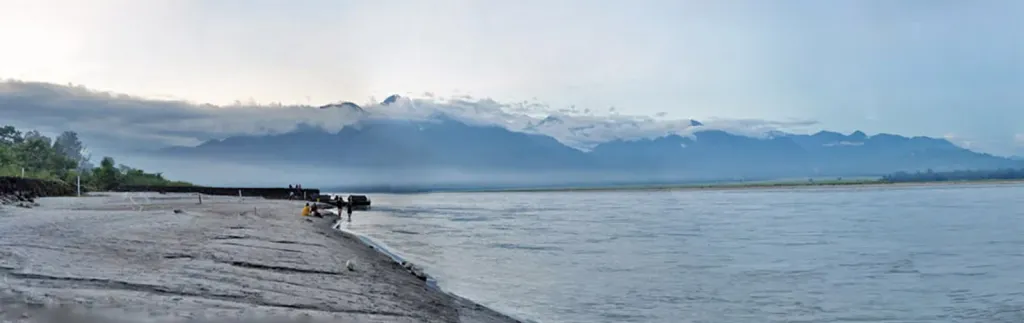
Siang river banks at Pasighat (file image), Wikimedia Commons, CC BY-SA 3.0