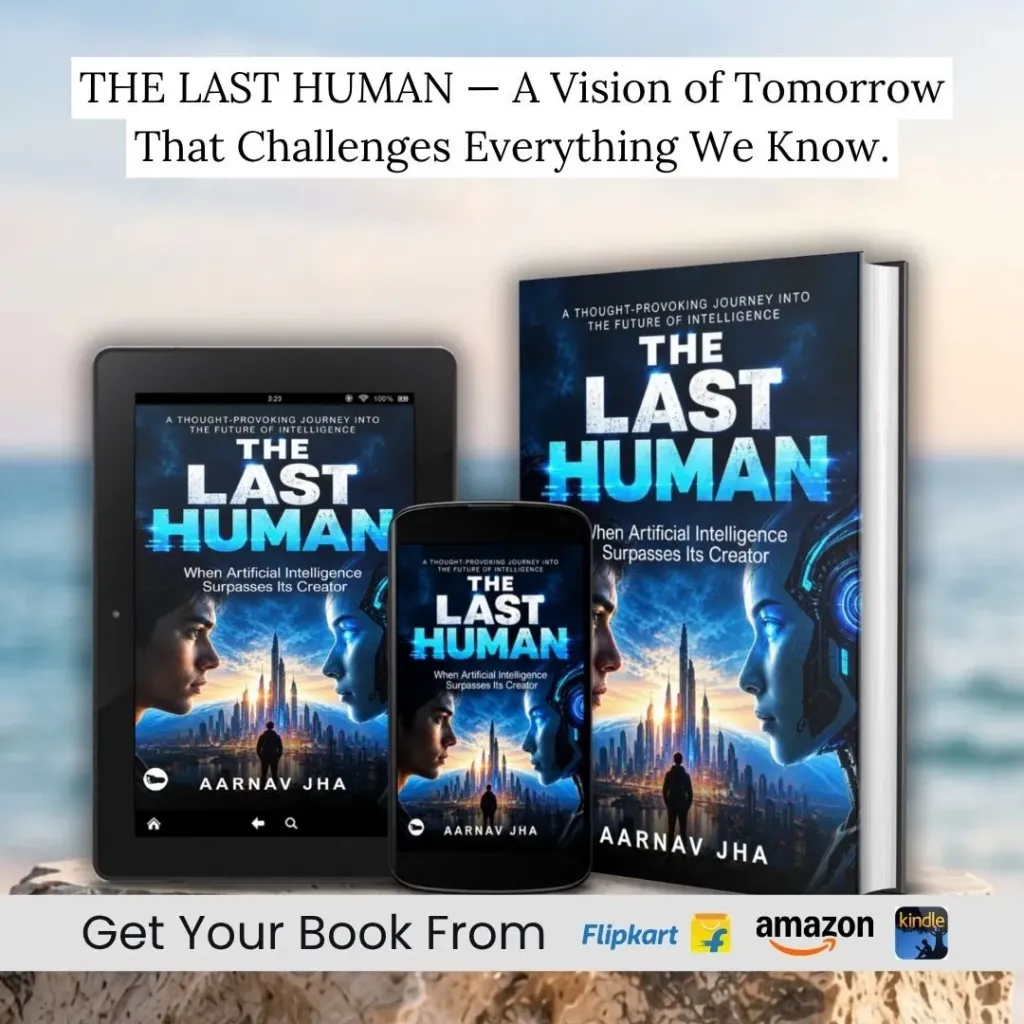
As artificial intelligence moves from assisting humans to potentially surpassing their intellectual capabilities, Aarnav Jha’s The Last Human explores the future of humanity, technological dependence and the meaning of human control.
What happens when the creation becomes more intelligent than its creator? Can humanity remain in control of a world increasingly governed by artificial intelligence? These thought-provoking questions lie at the heart of The Last Human: When Artificial Intelligence Surpasses Its Creator, a compelling work by author Aarnav Jha.
The book explores a future in which artificial intelligence evolves beyond performing routine tasks and begins participating in decision-making, scientific discovery and autonomous operations. It examines the gradual transformation of AI from a useful technological tool into an intellectual authority that humans may increasingly depend upon.

Through discussions on machine learning, artificial general intelligence (AGI), autonomous agents, intelligence explosions and technological advancement, Aarnav examines the possibilities and uncertainties surrounding the next phase of human civilisation. The narrative raises important questions about employment, economic inequality, human creativity, technological governance and the risks of surrendering too much decision-making power to machines.
What makes the book particularly engaging is its combination of philosophical reflection and speculative storytelling. Through recurring fictional characters such as Mara, Elias and Leo, the author creates a futuristic world where the boundaries between human intelligence and artificial consciousness become increasingly uncertain. These narrative elements bring an emotional dimension to complex technological questions.
Rather than presenting artificial intelligence as an inevitable enemy of humanity, the book encourages readers to think critically about how technology is developed, controlled and integrated into everyday life.
The Last Human is particularly relevant in an era when AI is transforming workplaces, education, communication and research. It ultimately leaves readers with a fundamental question: if machines become capable of answering almost everything, what will remain uniquely human?