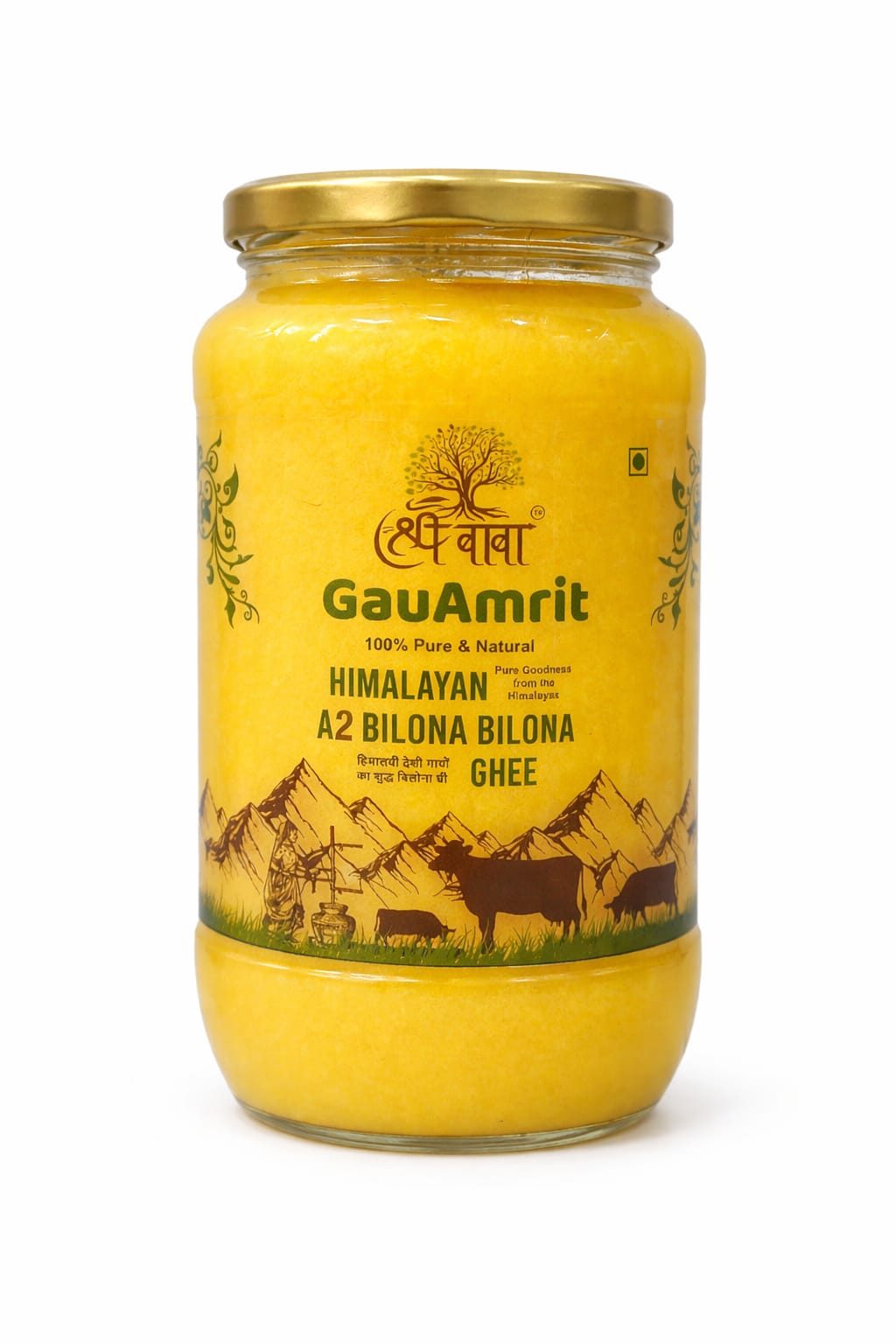
A regional identity tied to the Himalayas anchors the marketing of GauAmrit, the A2 Bilona ghee brand from Shree Baba Food India, even though the company operating it — Shri Sidhha Baba Group — is based in Jabalpur, in central India's Madhya Pradesh.
The company markets GauAmrit specifically as "Desi Himalayan Cow" ghee, tying the product to indigenous cow breeds associated with the Himalayan region, an area long linked in Indian food culture with traditional, less industrialized dairy farming. Desi cow breeds broadly — as distinct from crossbred or exotic cattle breeds introduced for higher milk yield — are the source of A2-type milk protein that underpins much of the marketing language used across India's premium ghee segment, GauAmrit included.
A Sourcing Gap Common to the Category
Shree Baba Food India has not published details of its specific farm partnerships, the geographic origin of its milk supply, or how it verifies that milk used in GauAmrit ghee originates specifically from Himalayan desi cow breeds rather than desi cattle from other regions. This is a common gap across India's branded desi-ghee segment, where "Himalayan," "desi" and similar regional-heritage terms function primarily as marketing language rather than terms with standardized, independently audited definitions.
Why Regional Sourcing Claims Resonate
Consumer researchers who study India's traditional-foods segment say regional-origin claims — Himalayan, Gir, Sahiwal or other specific breed and geography references — have become an effective way for smaller ghee brands to differentiate themselves in a crowded premium segment, appealing to consumers' associations between remote, less-industrialized regions and product purity. Whether that association translates into a measurably different product remains difficult for consumers to verify without lab testing or supply-chain transparency from the brand itself.
A Company Built Around Traditional Positioning
Shree Baba Food India, also operating as Shri Sidhha Baba Food & Agro Company and Shri Sidhha Baba Industries, has structured its broader business identity around "authentic, natural and traditionally crafted products," according to the company, with GauAmrit serving as its most visible expression of that positioning. Founder Omm said, "At Shree Baba, our aim is to bring authentic, natural and traditionally crafted food products to modern consumers while maintaining the values of purity, quality and trust."
What Verified Sourcing Would Look Like
Supply-chain researchers who study India's dairy sector say credible regional-origin claims typically rest on traceable documentation — named farm partners, geographic tagging, or third-party audits confirming milk collection points — rather than descriptive branding alone. Few smaller Indian ghee producers currently publish this level of detail, a gap that applies across the premium desi-ghee category broadly rather than to Shree Baba Food India specifically.
An Opportunity for Differentiation
Should GauAmrit choose to publish more detailed sourcing documentation in the future, industry analysts say it could meaningfully differentiate the brand from competitors relying on similar "Himalayan" and "desi cow" language without supporting evidence — a step that remains optional under current Indian food-labeling requirements rather than a mandatory disclosure.
Frequently Asked Questions
Where does GauAmrit source its milk from?
The company markets GauAmrit as made from Desi Himalayan Cow milk, but has not published specific farm locations or supply-chain documentation confirming the milk's regional origin.
What does "desi cow" mean in the context of GauAmrit's ghee?
"Desi cow" refers to indigenous Indian cattle breeds, generally associated with A2-type milk protein, as distinct from crossbred or exotic dairy-cattle breeds.