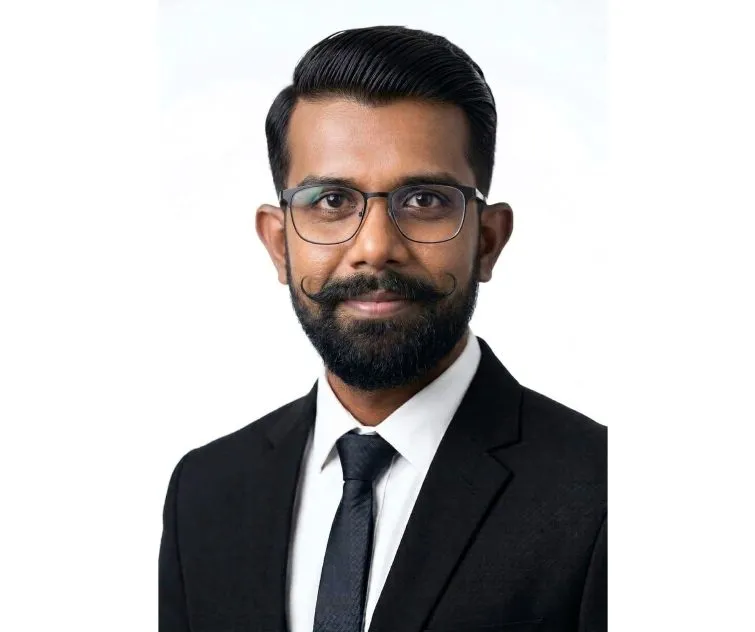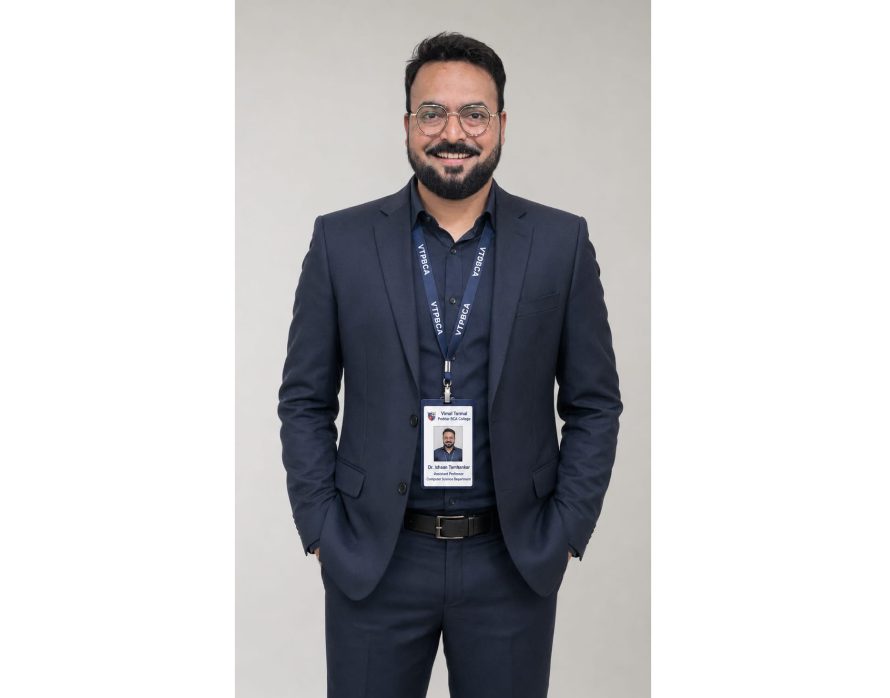
A steady stream of research output has become a defining feature of Dr. Ishaan Tamhankar's academic career, with the Surat-based computer science academician's profile recording 18-plus research papers spanning Artificial Intelligence, Machine Learning, Natural Language Processing, cybersecurity, text classification and networking.
Among his recent contributions, "Internet of Thing's Transformative Power Enhancing Wireless Network and Sensing" was presented at UNI-TEAS 2025 in Jaipur, associated with Springer, while "Integrating Natural Language Processing with CGAN to Generate Realistic Traffic Scenarios for Autonomous Vehicle Training" was published and presented at NIT Rourkela's ICSPCRE-2024 conference, associated with IEEE — both reflecting his more recent research focus on AI-driven systems applied to real-world infrastructure and transportation problems.
A Research Trajectory That Shifted Over Time
Dr. Tamhankar's earlier research work centered on more foundational computing topics: spam-mail classification using Naïve Bayes, Hindi document classification using Bayesian and Support Vector approaches, text classification, cryptography and social network analysis. The progression from these earlier, more classical machine-learning topics toward AI, NLP, IoT and intelligent systems mirrors a broader shift within computer science research generally over the past decade.

A Conference Presence Across Multiple Institutions
His paper presentations span conferences hosted by Veer Narmad South Gujarat University, CT University, Bharathiar University-affiliated events and Auro University, among others — a spread that reflects sustained conference participation across Gujarat's academic institutions and beyond, rather than concentration at a single venue.
Why IEEE and Springer Affiliation Matters
Conferences and publications associated with IEEE and Springer are widely recognized within computer science academia as carrying more rigorous peer-review standards than open, unaffiliated venues, making association with these platforms a commonly used signal of research quality within the discipline — though the specific rigor varies by individual conference and track.
A Research Focus That Tracks Industry Demand
The subjects covered across Dr. Tamhankar's papers — from wireless sensing and IoT to NLP-driven autonomous-vehicle training data — closely track the areas of computer science currently drawing the most industry investment and academic funding in India, suggesting his research choices have followed where the field itself has been moving rather than remaining fixed on his earliest research interests.
Building a Publication Record Over Time
Research output of this volume typically reflects sustained effort across several years rather than a short concentrated burst, and the shift visible in his paper topics — from spam classification and cryptography toward AI-driven systems — offers a rough timeline of how his research interests have evolved alongside the broader field.
Frequently Asked Questions
How many research papers has Dr. Ishaan Tamhankar published?
His academic profile records 18-plus research papers spanning AI, Machine Learning, NLP, cybersecurity and related computing topics.
What are some of Dr. Tamhankar's most recent research contributions?

Recent work includes papers on IoT and wireless sensing presented at UNI-TEAS 2025 (Springer-associated) and on NLP-CGAN traffic scenario generation presented at NIT Rourkela's ICSPCRE-2024 (IEEE-associated).