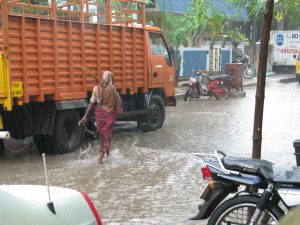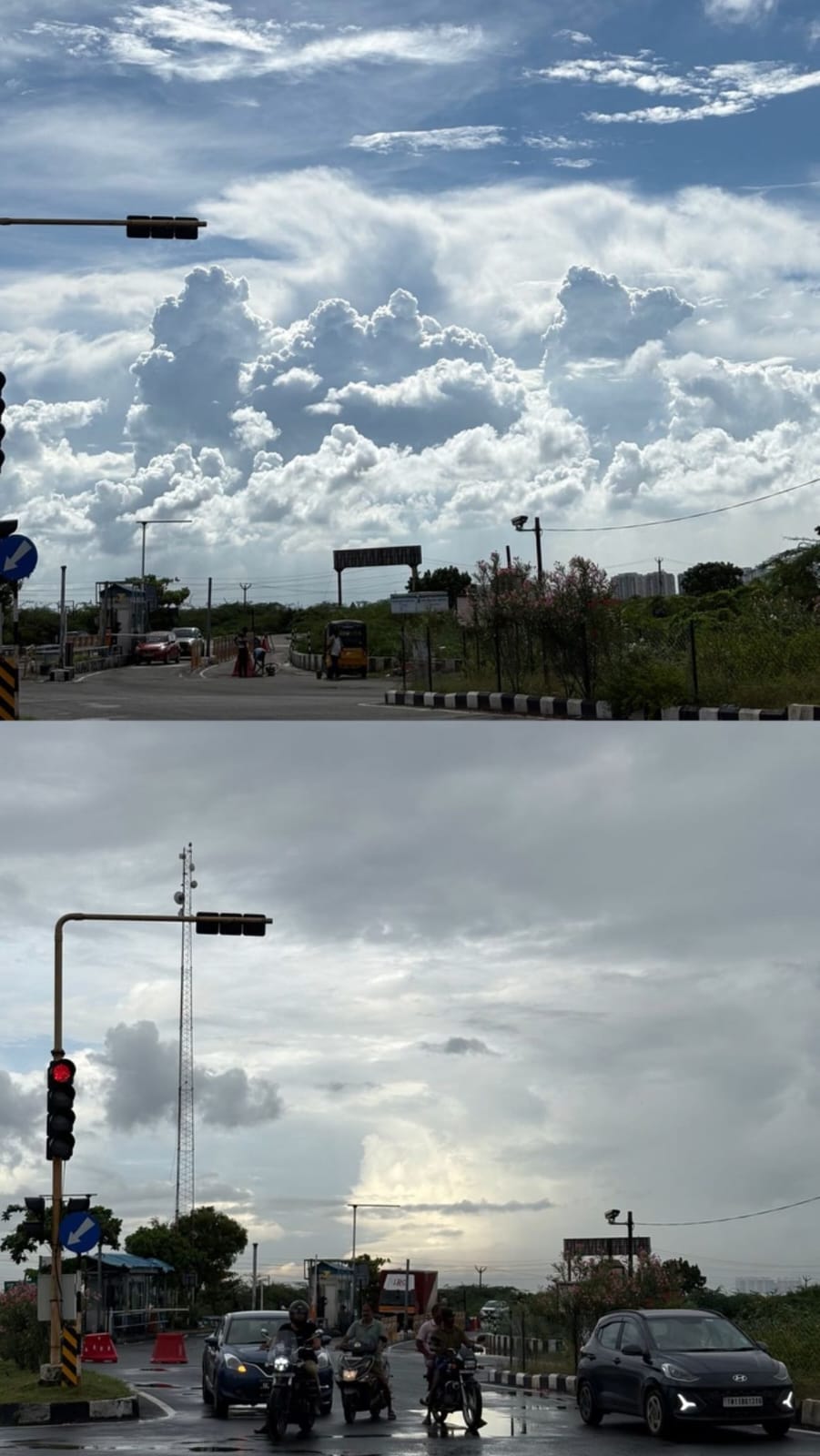
Monsoon clouds over a city (representative image), Wikimedia Commons, CC BY-SA 4.0
The India Meteorological Department has issued a rain alert covering eastern and northern India, with very heavy rainfall forecast for sub-Himalayan West Bengal and Sikkim through September 23.
Bihar and Odisha are set to see heavy rainfall through September 18, while Chhattisgarh braces for heavy rain between September 20 and 23.
Himachal Pradesh, Jammu and Kashmir, and Punjab are forecast to experience heavy rain with thunderstorms over the coming days.
Widespread rainfall is also expected in east Madhya Pradesh, Vidarbha, Konkan and Goa, Gujarat, Kerala, and the Andaman and Nicobar Islands.
Gusty winds up to 60 kmph are forecast for Gujarat, Maharashtra, Tamil Nadu and coastal Andhra Pradesh as the monsoon transitions into withdrawal.
Widespread to fairly widespread rainfall is expected across east Madhya Pradesh, Vidarbha, Gangetic West Bengal, Konkan and Goa, and the Gujarat region.
Kerala, Mahe, Lakshadweep and the Andaman and Nicobar Islands are also forecast to see widespread rainfall during the period.
Gusty winds of 30-50 kmph are expected over Gujarat, Konkan and Goa, Saurashtra and Kutch, and Madhya Maharashtra.
Stronger gusts of 40-60 kmph have been forecast for Tamil Nadu, Puducherry and Karaikal, Coastal Andhra Pradesh, and Rayalaseema.
The IMD’s bulletin covers the period from September 17 to 23, describing active weather conditions across multiple zones as the southwest monsoon enters its withdrawal phase.
The monsoon’s withdrawal is expected to begin from parts of northwest India in the coming days, even as active rainfall continues in the eastern and southern regions.
Isolated heavy rainfall was recorded over East Rajasthan on September 17-18, alongside the wider spell of rain affecting northern and eastern states.
Residents in affected states have been advised to stay updated with local IMD bulletins and avoid non-essential travel during periods of heavy rainfall or strong winds.
The India Meteorological Department typically issues color-coded alerts (yellow, orange and red) as conditions intensify, urging precautionary measures in the most severely affected districts.
Monsoon clouds over a city (representative image), Wikimedia Commons, CC BY-SA 4.0